Doji Candlestick Pattern: What It Means and How to Trade It
By Bharat · July 5, 2026
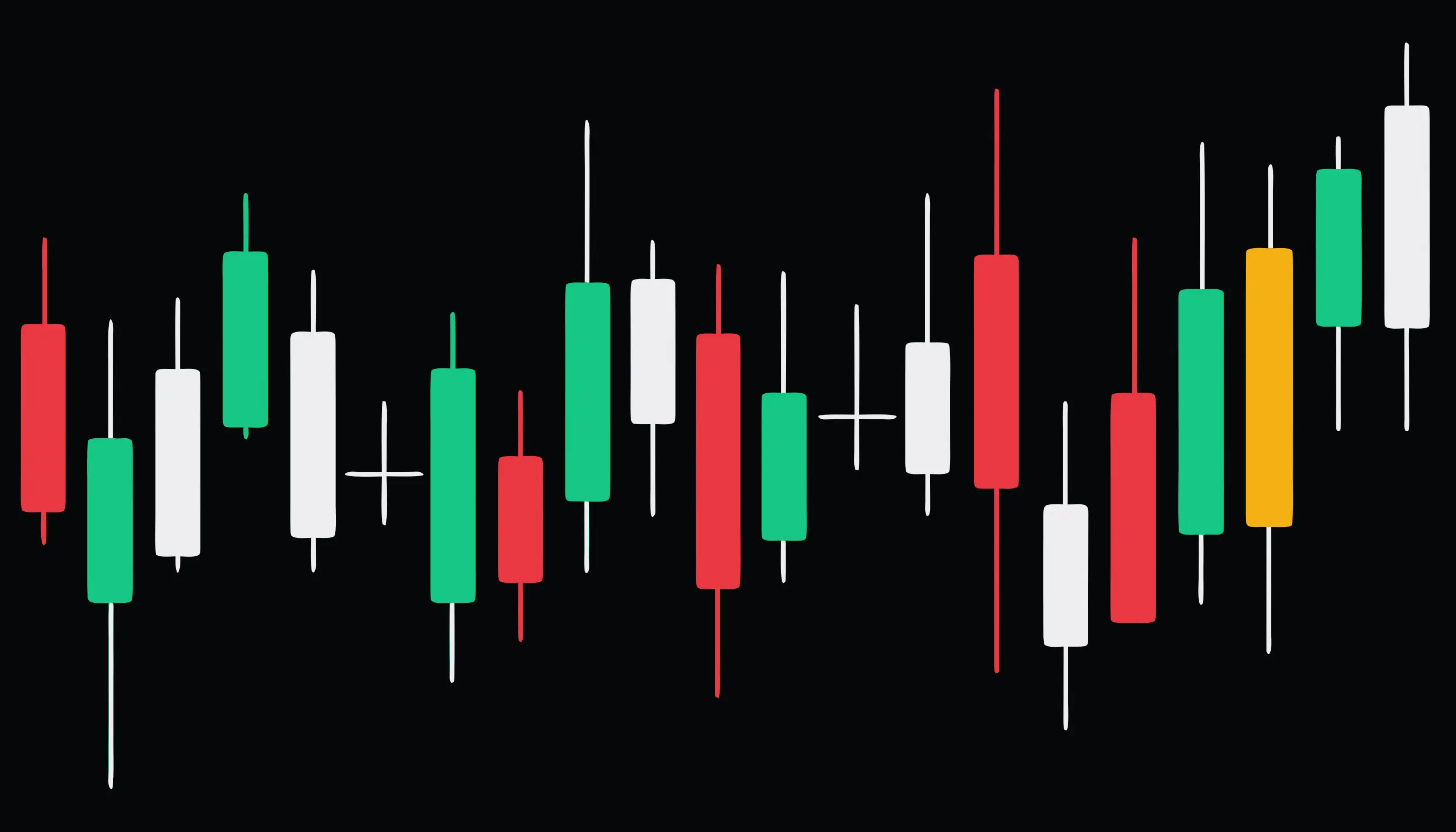
A doji is the simplest candlestick shape to describe and one of the easiest to over-interpret: the open and close land almost exactly on top of each other, so the body shrinks to a thin line while the wicks show the full range the price actually traveled during the period.
What it actually shows
Read literally, a doji means neither buyers nor sellers won that round. Price may have swung well above and below the open, but by the close it ended up right back where it started. That's not bullish and it's not bearish on its own — it's a tie.
Common doji variants
- Standard doji — small wicks on both sides, a tight, quiet tie.
- Long-legged doji — long wicks both above and below, meaning a wide, volatile fight that still ended in a stalemate.
- Dragonfly doji — almost no upper wick, a long lower wick; sellers pushed price down hard and it was fully rejected.
- Gravestone doji — almost no lower wick, a long upper wick; buyers pushed price up and it was fully rejected.
Why context decides what it means
A doji's significance depends almost entirely on where it shows up. A doji in the middle of a strong, orderly trend is often just a pause — the market catching its breath before continuing. A doji after an extended trend, especially at a level that already mattered, reads differently: it can mark the point where the side that had been in control ran out of conviction.
This is why a doji is rarely traded in isolation. It's a flag that the balance of power just shifted to neutral — what happens on the candles immediately after tells you which side regains control.
How to actually use it
Treat a doji as a prompt to pay closer attention, not as a signal on its own. Watch the next one or two candles: a strong directional close away from the doji tells you who won the tie-break. Combine that with the broader trend and any nearby support or resistance level before treating it as anything more than "something changed here."
Ready to put this into practice?
Structured courses on price action, options, and risk management.
Browse courses