Double Top Pattern: How to Spot It and Trade It
By Bharat · July 5, 2026
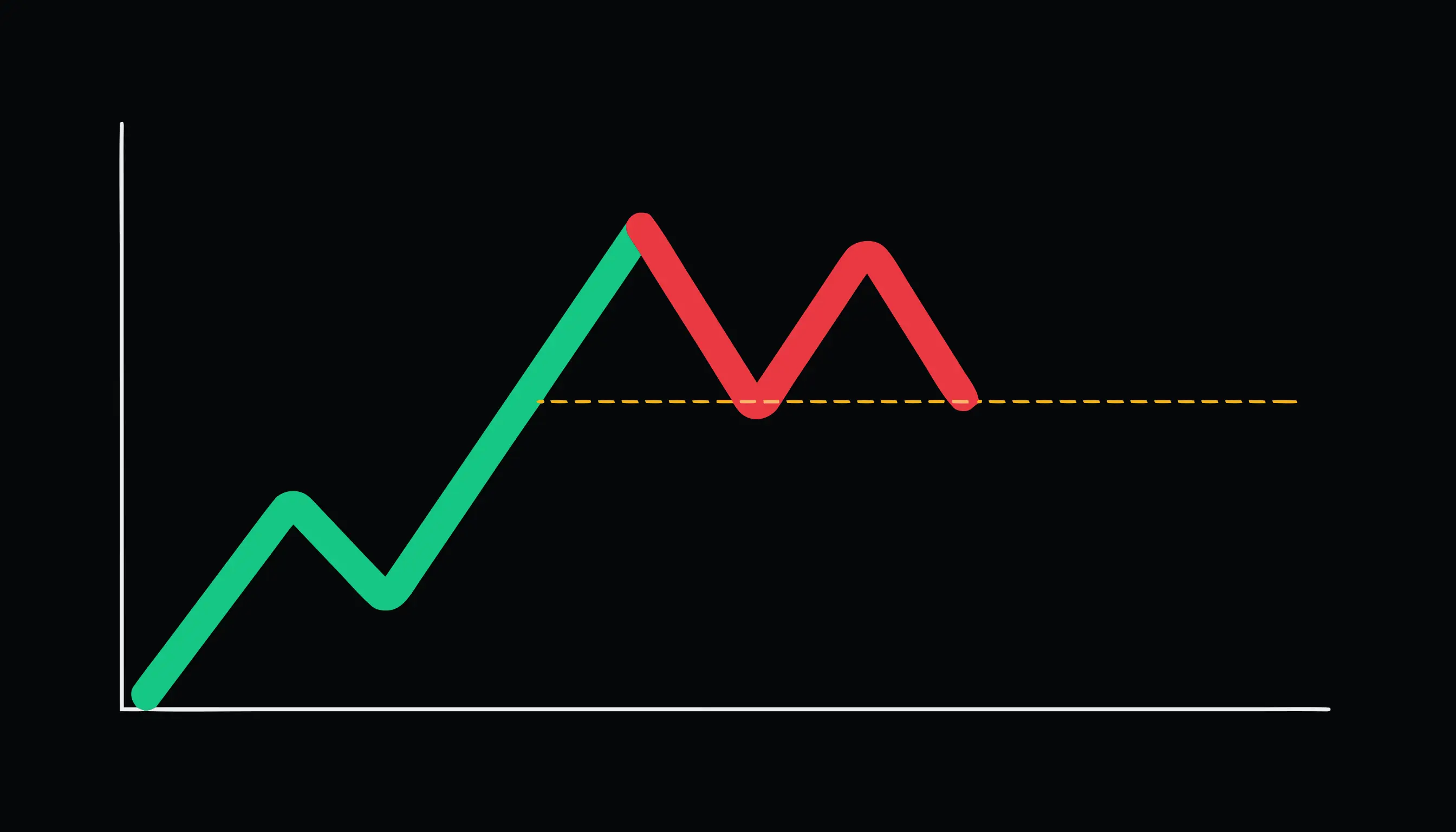
A double top is one of the simplest chart patterns to describe: price rallies to a peak, pulls back, rallies again to roughly the same height, and then fails a second time — tracing out a shape that looks like the letter M.
What it looks like
- A first peak, followed by a pullback.
- A second peak at roughly the same height as the first.
- A break below the support level formed by the pullback between the two peaks.
The story: buyers pushed to a level, got rejected, regrouped, and pushed to that same level again — and got rejected a second time. Two failures at the same price are more informative than one; the level is showing itself to be a real ceiling, not a one-off.
Why the second peak matters more than the first
A single peak is just a high. It's the second attempt failing at roughly the same level that turns it into a pattern — it shows the level isn't a fluke, and that buyers who chased the first peak are now sitting on a loss, which itself adds selling pressure on the next test.
The confirmation line
The support level formed by the dip between the two peaks is the line that matters. As with the head and shoulders, the pattern isn't complete until price actually breaks below that line — the two peaks alone are a warning sign, not a signal.
What strengthens the pattern
- Volume declining from the first peak to the second, showing weakening buying pressure even as price revisits the same level.
- A clean, sustained uptrend before the pattern, rather than a choppy, directionless one.
- A decisive break of the support line, rather than a slow drift through it.
The trap to watch for
Not every M-shaped wiggle is a double top. Two peaks that are meaningfully different heights, or a support break that immediately gets reclaimed, is a weaker or failed version of the pattern — worth noting, but not worth trading with the same confidence as a clean one.
Ready to put this into practice?
Structured courses on price action, options, and risk management.
Browse courses