Head and Shoulders Pattern: How to Spot It and Trade It
By Bharat · July 5, 2026
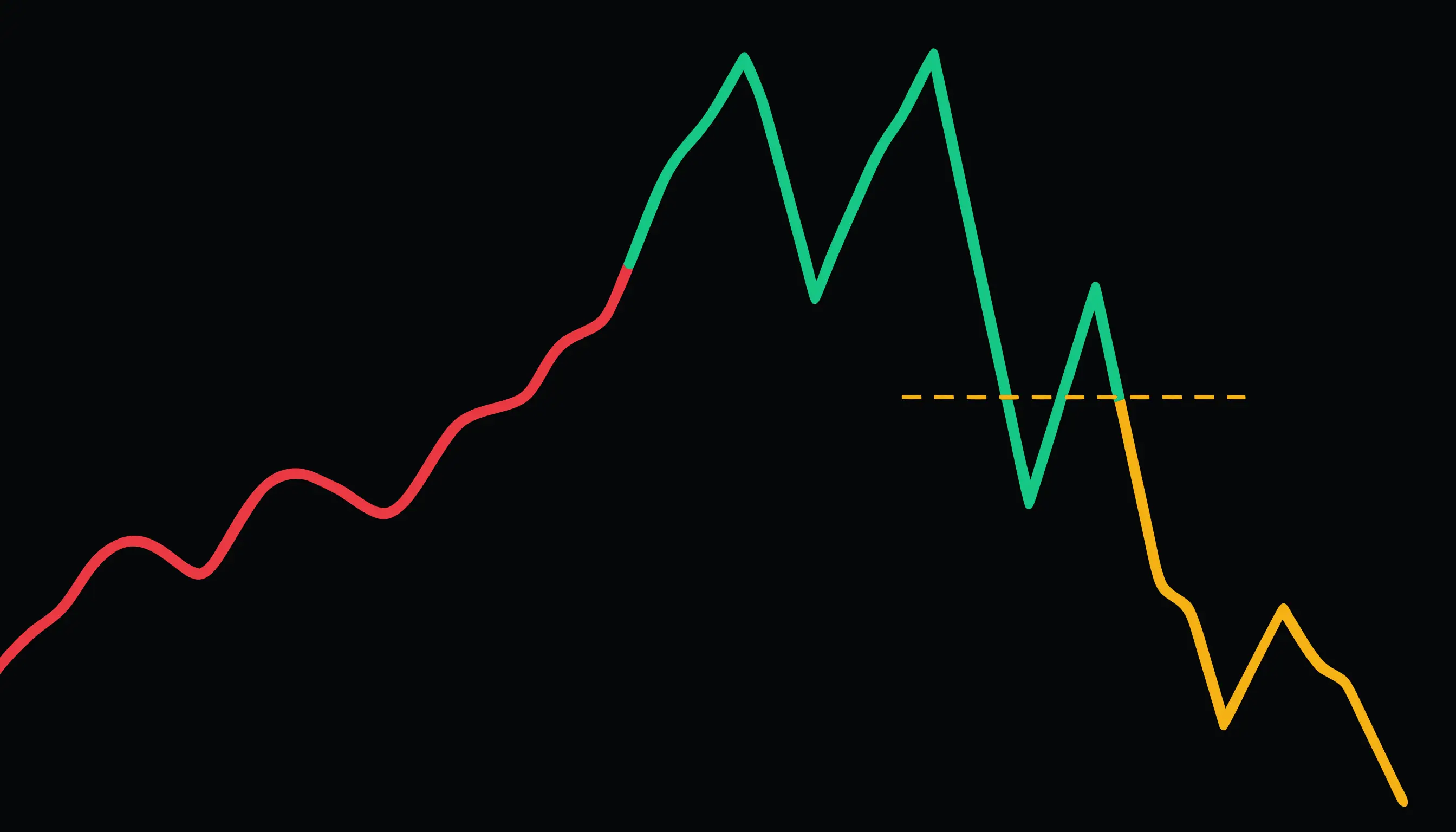
The head and shoulders pattern marks the end of an uptrend, and it earns its name from its shape: two smaller peaks (the shoulders) on either side of one larger peak (the head).
The anatomy of the pattern
- Left shoulder — price rises to a peak, then pulls back.
- Head — price rises again, this time to a higher peak than the left shoulder, then pulls back to roughly the same level as the first pullback.
- Right shoulder — price rises a third time, but fails to reach the height of the head, then turns down.
- Neckline — a line connecting the two pullback points between the shoulders and the head. This is the level that matters most.
Read as a sequence: buyers push to a new high (left shoulder), push even higher (head), then can only manage a weaker attempt (right shoulder) before sellers take over. Each failed push is progressively weaker evidence that the uptrend is running out of demand.
Why the neckline is the real signal
Spotting the three peaks is only the setup. The pattern isn't considered complete until price actually breaks below the neckline — before that happens, what looks like a head and shoulders could still resolve as just another pullback inside a continuing uptrend. The break, not the shape, is what confirms the reversal.
What makes one more reliable
- Symmetry. Shoulders at roughly similar heights, on either side of a clearly higher head, is a cleaner pattern than a lopsided one.
- Volume. Volume that fades from the left shoulder through the head to the right shoulder, then picks up again on the neckline break, is a textbook confirmation.
- Where it forms. A head and shoulders after a long, extended uptrend carries more weight than one after a short, choppy move.
The mistake to avoid
The most common error is calling the pattern before the neckline actually breaks — trading the right shoulder's rejection as if the neckline break has already happened. Until price is through that line, the pattern is a candidate, not a confirmed signal.
Ready to put this into practice?
Structured courses on price action, options, and risk management.
Browse courses