Morning Star Candlestick Pattern: A Complete Guide
By Bharat · July 5, 2026
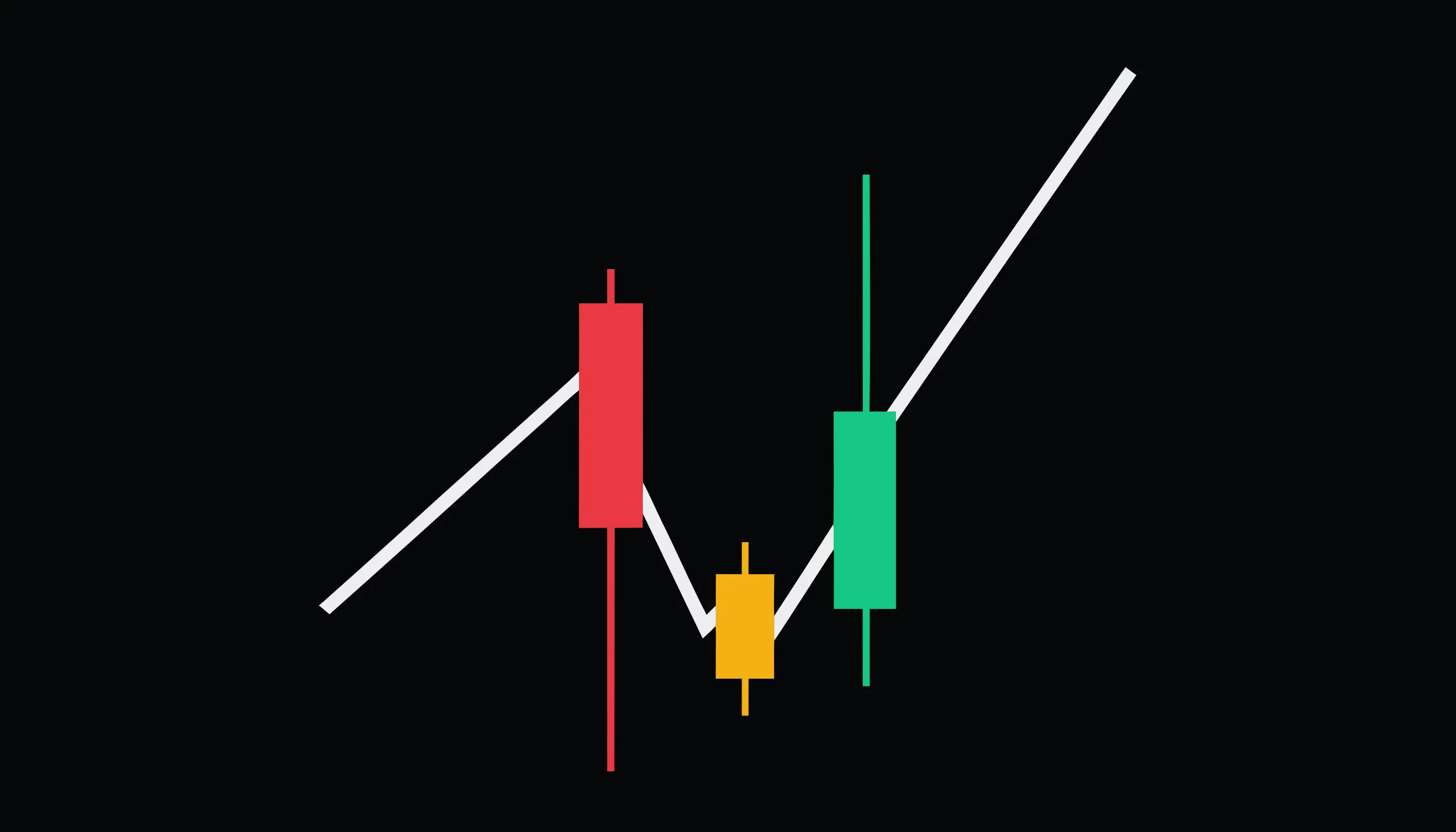
Where a hammer or a doji is a single candle telling you something changed, the morning star spreads the same story across three candles — which is exactly why it tends to carry more weight. It's a slower, more deliberate version of the same handoff of control from sellers to buyers.
The three candles
- A large red candle, continuing the existing downtrend — sellers are still clearly in charge.
- A small-bodied candle that gaps down or opens near the previous close, showing the selling losing momentum — this candle can be red, green, or even a doji. Its size matters more than its color.
- A large green candle that closes well into the body of the first red candle, ideally above its midpoint — buyers have now taken clear control.
Read as a sequence: strong selling, hesitation, strong buying. The middle candle is the hinge the whole pattern turns on.
Why the middle candle is the one to study
A lot of traders skim past candle two and focus on the dramatic first and third candles, but the small body in the middle is what separates a real morning star from a random three-candle stretch. It's the visual proof that the sellers pushing candle one ran out of force before candle three's buyers took over. A middle candle with a real body and no gap is a much weaker version of the pattern than a small, gapped one.
What makes one more reliable
- Depth of the third candle's close. Closing above the midpoint of candle one is the minimum; closing above candle one's open is stronger still.
- Where it forms. A morning star at a level with prior support already means more than one in open space.
- Volume on the third candle. Rising volume on the green candle supports the idea that new buyers are genuinely stepping in, not just a short squeeze.
The mistake to avoid
Because the morning star takes three full candles to complete, it's tempting to jump in after just the first two, betting the third will finish the pattern. That's not trading the morning star — it's trading a guess about what a future candle will do. The entire value of the pattern comes from all three candles actually having formed.
Ready to put this into practice?
Structured courses on price action, options, and risk management.
Browse courses