Spinning Top Candlestick Pattern: What It Signals
By Bharat · July 5, 2026
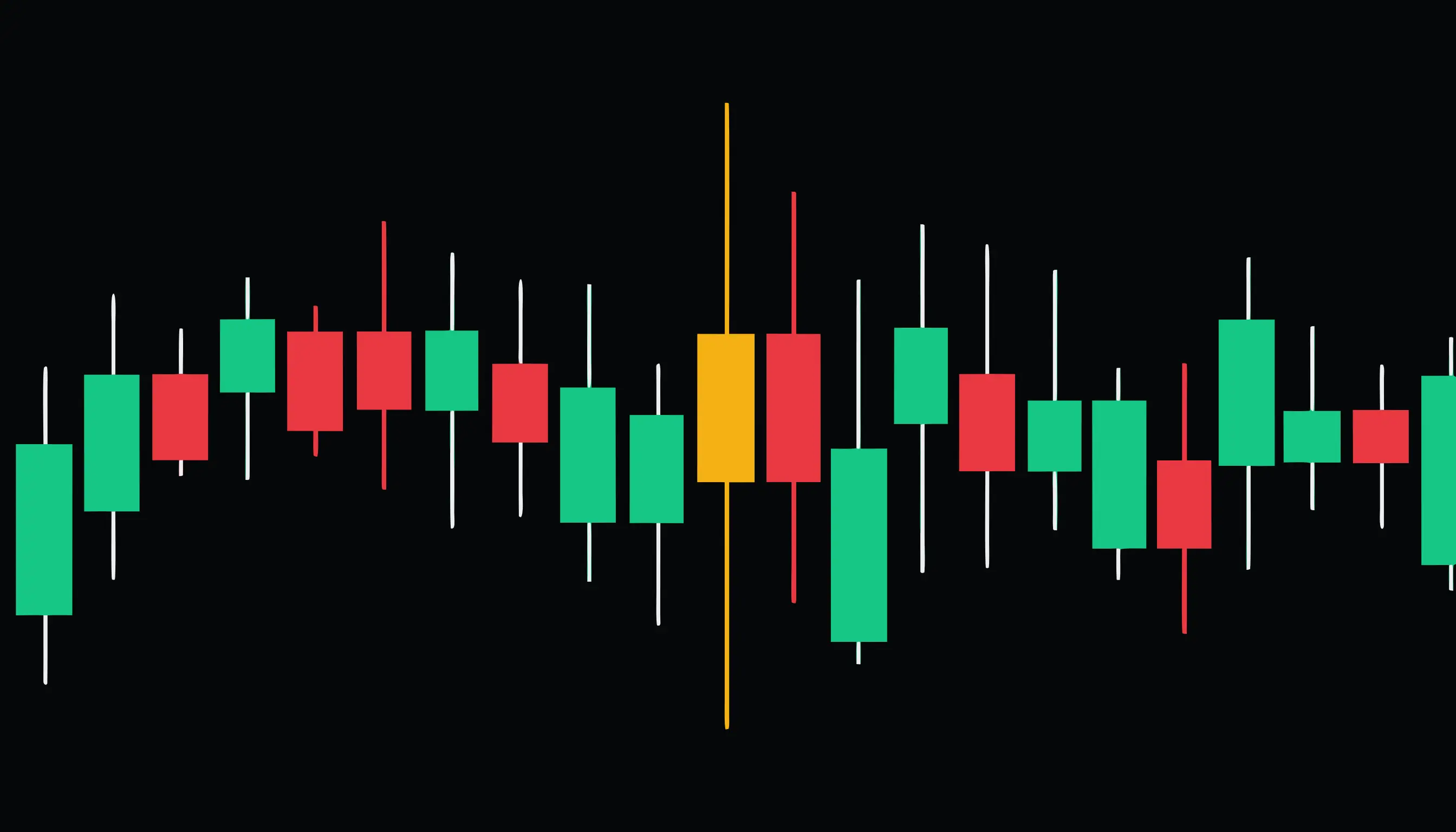
A spinning top sits in the same family as a doji, but it isn't quite the same thing. Where a doji's body shrinks to almost nothing, a spinning top has a small but real body, centered between two wicks of roughly similar length.
What it looks like
- A small body, positioned roughly in the middle of the candle's total range.
- An upper wick and a lower wick that are both noticeably longer than the body, and roughly equal to each other.
- The body's color (green or red) matters much less here than its size and position.
Read literally: price traveled a wide range in both directions during the period, but by the close it settled close to where it opened. Both buyers and sellers pushed hard; neither one won by much.
Why the wicks are the story
The long wicks on both sides are what separate a spinning top from an ordinary small-bodied candle. They show real volatility and real disagreement — this wasn't a quiet, low-conviction session. It was an active fight that simply ended close to a draw.
How to read one in context
- After a strong trend, a spinning top can mark the point where the move is running out of steam — the dominant side is no longer pushing through resistance easily.
- In a range-bound market, a spinning top is far less notable; wide, indecisive candles are just what that kind of market looks like.
- Clustered with other spinning tops or dojis, it adds up to a stronger case for genuine indecision at that level.
What it doesn't tell you
A single spinning top doesn't tell you which side will win next — only that the fight is closer than it looked a candle or two earlier. What happens immediately afterward, and where this is happening on the chart, is what turns "interesting" into "actionable."
Ready to put this into practice?
Structured courses on price action, options, and risk management.
Browse courses