Double Bottom Pattern: How to Spot It and Trade It
By Bharat · July 5, 2026
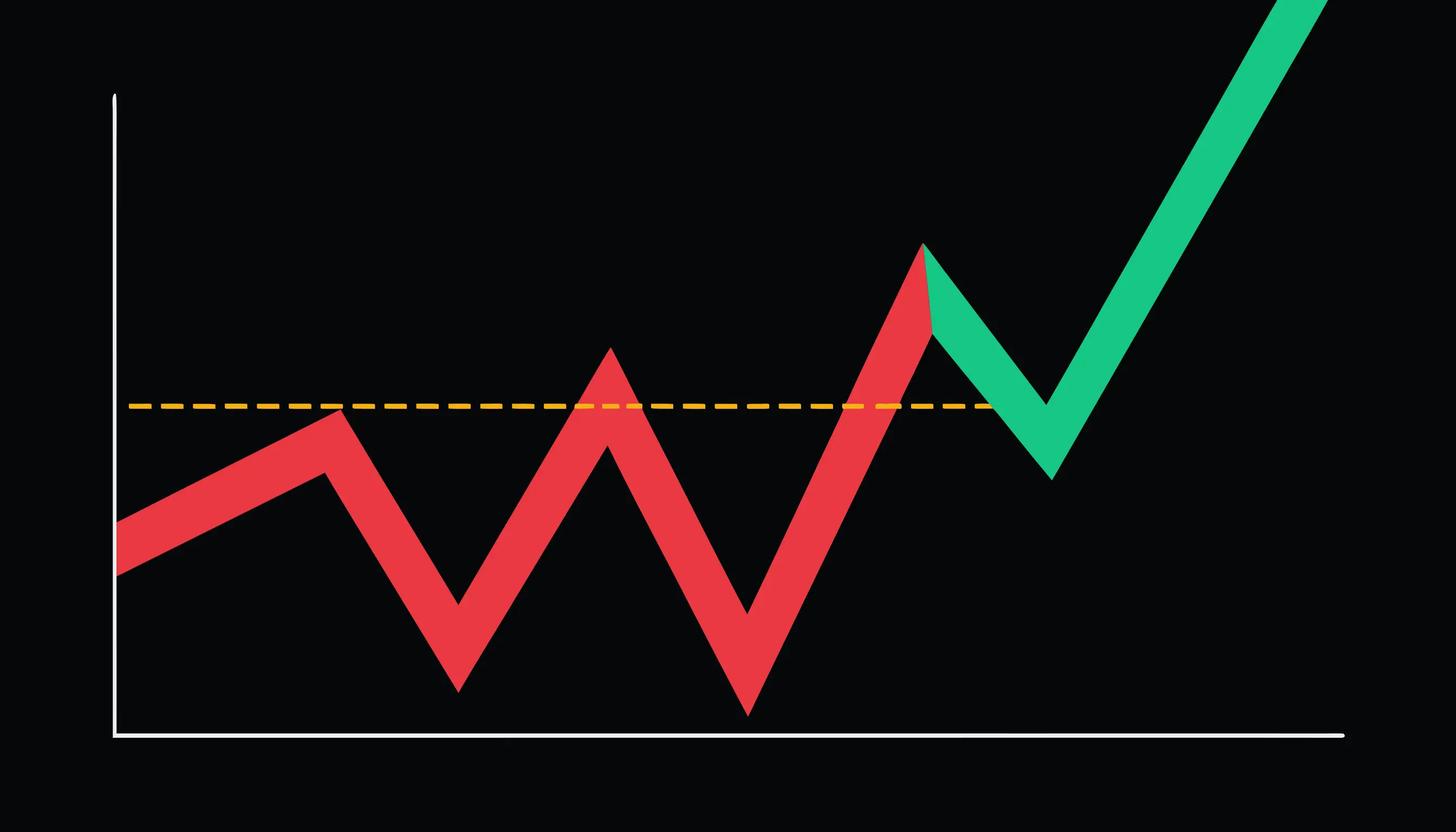
A double bottom is the exact mirror of the double top: price falls to a trough, bounces, falls again to roughly the same depth, and this time holds — tracing out a shape that looks like the letter W.
What it looks like
- A first trough, followed by a bounce.
- A second trough at roughly the same depth as the first.
- A break above the resistance level formed by the bounce between the two troughs.
The story: sellers pushed price down to a level, buyers stepped in and bounced it, sellers pushed it back down to that same level again — and this time buyers held the line. Two successful defenses of the same price are stronger evidence than one; the level is showing itself to be real support.
Why the second trough matters more than the first
A single low is just a low. It's the second test holding at roughly the same level that turns it into a pattern — it shows sellers couldn't push through a level they'd already tested once, which tends to shift confidence toward the buyers defending it.
The confirmation line
The resistance level formed by the bounce between the two troughs is the line that matters, exactly as the support line matters for a double top. The pattern isn't complete until price actually breaks above that line — two troughs alone are a setup, not a signal.
What strengthens the pattern
- Volume picking up on the second trough and especially on the breakout above resistance, showing real buying interest rather than a quiet drift.
- A clear, sustained downtrend before the pattern, giving the reversal something real to reverse.
- A decisive break above resistance, rather than a slow grind through it.
The trap to watch for
A shallow, sloppy W where the two troughs are at meaningfully different depths is a weaker version of the pattern. So is a breakout above resistance that immediately fails and falls back below it — that's a sign the level wasn't as strong as the shape suggested.
Ready to put this into practice?
Structured courses on price action, options, and risk management.
Browse courses